Accessories
Accessories are the parts nobody photographs and everybody eventually needs. Grinders, rolling papers and trays, storage tins, digital scales, glassware, cleaning supplies and the small consumables that keep a setup working. They are cheap individually and they make a disproportionate difference to whether the rest of your kit is a pleasure or a nuisance.
This is also the broadest category in the shop, so rather than list everything, this page groups the range by what each item is for, explains what separates a good one from a cheap one, and covers the maintenance supplies that extend the life of hardware you already own.
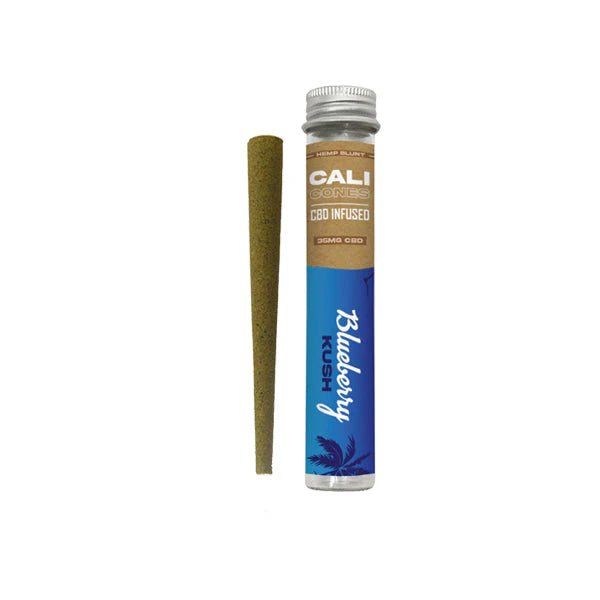
Showing 13 to 24 of 91 results
-
Accessories
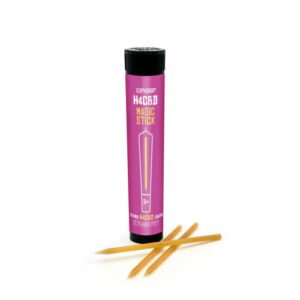
Euphoria H4CBD Pre Roll Magic Sticks
$13.99 Select options This product has multiple variants. The options may be chosen on the product page -
Accessories
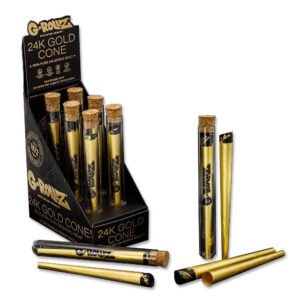
G-Rollz Ape King Size Pre-Rolled Cones Canada
$3.49 Select options This product has multiple variants. The options may be chosen on the product page






Grinders, and why the cheap ones disappoint
A grinder produces a consistent particle size, and consistency is the whole point. Anything you prepare by hand is uneven, which in a dry herb vaporizer means some material scorches while the rest barely heats.
Build quality shows up in three places. Tooth geometry determines whether the material is sheared or crushed, and diamond shaped teeth cut far more cleanly than blunt pegs. Thread quality determines whether the lid still turns smoothly in a year. Material matters most of all: anodised aluminium holds an edge and resists deformation, while unbranded pot metal rounds off within months and starts shedding flakes.
Two piece grinders are simplest. Three and four piece designs add a collection chamber below a screen, which separates the finest material. Four piece is the sensible default for most people. A medium grind, roughly the texture of coarse ground coffee, is what you are aiming for.
Rolling papers, cones and tips
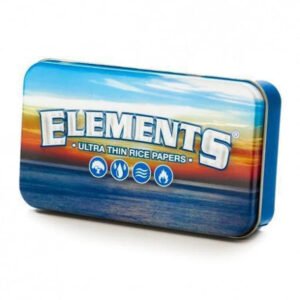
Papers differ in material, thickness and size, and each changes the experience. Wood pulp is the traditional option, easy to handle and quick burning. Rice papers are thinner and burn slower with less taste of their own. Hemp papers sit between the two and are the most forgiving for anyone still learning.
Thinner is generally better because you taste less of the paper, but thinner papers are also harder to roll. If you are new, start with hemp in a standard size rather than the thinnest rice paper you can find. Unbleached papers avoid the chlorine processing used to make papers white.
Pre rolled cones remove the skill requirement entirely and have become the most popular format for exactly that reason. Tips, also called filters or crutches, keep the end open, stop material reaching your mouth and make the whole thing easier to hold. They are usually sold alongside papers and cost almost nothing.
Trays, storage and keeping things fresh
A rolling tray is a raised edge surface that stops material scattering and gives you somewhere to work. Metal trays are easy to wipe clean, larger ones give room for a grinder and papers at once, and a magnetic lid keeps everything contained if it is going in a bag.
Storage is about moisture and light. Airtight containers hold humidity steady, which keeps material at a consistent moisture level so sessions behave the same way each time. Glass and stainless steel are inert and do not absorb odours, which is why they are preferred over plastic for anything stored more than briefly.
Keep containers out of direct light and away from heat, both of which degrade aromatic compounds. A cupboard is fine. Smell proof bags and cases exist for transport and vary enormously in how well they actually work, with the seal quality mattering far more than the material.
Digital scales and what precision means
Scales are specified by capacity and readability. A 100 g by 0.01 g scale reads to a hundredth of a gram up to 100 g. A 500 g by 0.1 g scale reads to a tenth up to 500 g. Higher capacity almost always means coarser readability, which is why buyers often end up with two.
For small quantities, readability matters more than capacity. A scale that reads to 0.01 g is genuinely useful where one reading to 0.1 g is not. Look for a tare function, a calibration mode and a stable platform, because a scale that cannot be calibrated will drift and become useless.
Keep scales flat, clean and away from draughts, and calibrate periodically with a proper weight rather than a coin. Our range covers pocket scales through to bowl scales for larger quantities.
Glassware, bongs and dab rigs
Borosilicate glass is the standard because it tolerates thermal shock far better than ordinary soda lime glass. Wall thickness matters: thicker glass survives knocks that shatter thin glass, at the cost of weight.
Percolators are the chambers that break smoke into smaller bubbles, increasing contact with water and cooling the result. More percolation cools more but also increases drag, and every extra chamber is another surface to clean. Two is a sensible maximum for most people.
Joint size, commonly 14 mm or 18 mm, determines which bowls and bangers fit. Check it before buying accessories, since it is the most common mismatch. Freezable glycerin sections cool without adding drag and are genuinely effective, though they add a step to the routine.
Choosing between accessory tiers
Across almost every accessory, the difference between the cheapest option and a decent one is small in money and large in how long it lasts. This is where the difference actually shows.
| Item | Cheap version | Better version | Why it matters |
|---|---|---|---|
| Grinder | Pot metal, blunt pegs | Anodised aluminium, diamond teeth | Holds an edge, does not shed flakes |
| Scales | No calibration mode | Calibration plus tare | A scale that drifts is worthless |
| Glass | Thin soda lime | Thick borosilicate | Survives thermal shock and knocks |
| Storage | Thin plastic | Glass or stainless, sealed | Inert, holds humidity, no odour transfer |
| Papers | Bleached wood pulp | Unbleached hemp or rice | Less paper taste, cleaner burn |
None of these upgrades is expensive. Taken together they are usually less than the price of a single mid range device from our vape kits range, and they last years. If you are still choosing hardware, best vape for beginners in Canada and best dry herb vaporizer in Canada are the better starting points.

Cleaning and maintenance supplies
Isopropyl alcohol at 90 percent or above is the single most useful thing in this category. It dissolves residue on glass, cleans 510 connections and battery contacts, and evaporates without leaving anything behind. Coarse salt added to alcohol gives a scrubbing action inside glassware that a brush cannot reach.
Cotton buds, pipe cleaners and a set of brushes cover the awkward spaces in tanks, chambers and mouthpieces. Spare O rings and seals are the cheapest way to stop a tank leaking, and they perish long before the tank does.
Cleaning is not optional on anything with an airway. Residue narrows the path, dulls flavour and eventually makes a device feel broken. Most reports we get of hardware failing turn out to be accumulated residue, particularly on dry herb vaporizers and vape tanks.
Build a simple routine rather than waiting for a problem. Wipe contacts and threads every week or two, rinse anything that holds liquid when you change flavours, and do a full strip down of glassware once a month. Fifteen minutes spread across a month keeps everything performing the way it did when it was new, and it costs almost nothing in supplies.
What to buy alongside a new device
If you are buying hardware for the first time, five inexpensive items turn it from a device into a working setup: a cleaning brush, a small bottle of isopropyl alcohol, spare seals or screens for whatever you bought, a storage container, and a plastic case if your device takes removable cells.
For dry herb specifically, add a grinder before anything else. It changes performance more than any other single purchase and costs a fraction of the device.
For refillable vaping, add spare replacement coils and a spare glass if the tank uses one. Both are consumables that will fail at an inconvenient moment, and having them in a drawer prevents pushing a dying coil for another few days.
None of this needs to be bought at once. Start with the item that addresses whatever currently annoys you most, whether that is an uneven grind, a tank that leaks or a device that has lost its flavour, and add the rest as you go. The whole list usually comes to less than a single device.
Bowls, bangers and the small glass parts
Bowls and bangers are the consumable end of glassware. A bowl holds material above the joint and is usually simple, though screen fitted versions stop material pulling through. A banger is a quartz cup used for concentrates, heated then loaded.
Quartz is the standard for bangers because it heats quickly, tolerates thermal cycling and imparts no taste. Thicker walls hold heat longer and survive more cycles. Titanium heats fast and is effectively unbreakable but can add a metallic note. Ceramic holds heat longest and cracks most easily.
Carb caps sit over a banger to restrict airflow, which lowers the effective pressure and lets material vaporise at a lower temperature. They are inexpensive and make a genuine difference. Clean quartz while it is still warm with a cotton bud, because residue left to carbonise becomes very difficult to remove and permanently dulls the surface.
Canadian rules and delivery
Accessories in this range are general goods and contain no nicotine or controlled substances. They are sold alongside vaping products governed by Tobacco and Vaping Products Act, and provincial rules on those products are tracked in vaping laws by province.
We ship only inside Canada behind an age gate, with carriers and timings on our shipping and delivery page. Glass is packed carefully but breakage in transit does happen, and our returns policy page covers how we handle it.
Some accessories are intended for use with cannabis, which in Canada is regulated under the Cannabis Act and sold only through provincially authorised retailers. We sell the accessories, not the cannabis. Health Canada cannabis information publishes the current federal position.
Common questions
Do I really need a grinder?
For a dry herb vaporizer, effectively yes. Hot air needs consistent surface area and an even path, and material prepared by hand has neither, so some scorches while the rest barely heats. A grinder is the cheapest meaningful upgrade to any vaporizer.
What is the difference between rolling paper materials?
Wood pulp is traditional, easy to handle and burns quickly. Rice is thinner, burns slower and adds less taste. Hemp sits between the two and is the most forgiving if you are still learning. Thinner papers taste cleaner but are harder to roll.
What should I look for in digital scales?
Readability rather than capacity for small quantities, plus a tare function and a calibration mode. A scale that cannot be calibrated will drift and eventually become useless. Higher capacity almost always means coarser readability.
How do I clean glassware?
Isopropyl alcohol at 90 percent or above, with coarse salt added to give a scrubbing action in places a brush cannot reach. Rinse thoroughly with warm water afterwards and let it dry fully. Never use boiling water on cold glass, which risks thermal shock.
What joint size do I need?
Commonly 14 mm or 18 mm, and it determines which bowls and bangers will fit. Check the size on your existing piece before buying anything to go with it, since this is the most frequent mismatch in the category.
Are these accessories legal to buy in Canada?
Yes. Grinders, papers, trays, scales, storage and glassware are general goods. What you choose to use them with is regulated separately, and legal cannabis in Canada is sold only through provincially authorised retailers, which we are not.