Terpenes
Concentrated aromatic extracts, sold as single isolates and as blended strain profiles. Used to add authentic botanical aroma and flavour to unscented bases, always heavily diluted. Shipped within Canada.
Terpenes are the aromatic compounds that give plants their smell. Pine, citrus peel, lavender, hops and black pepper all owe their character to them, and so does every botanical you have ever noticed the scent of. They are volatile, meaning they evaporate readily at low temperatures, which is exactly why you can smell them from across a room.
In this category they are sold as concentrated extracts, usually in small bottles measured in millilitres. People use them to add aroma and flavour to unscented bases, to recreate specific strain profiles, and in aromatherapy. This page explains the main terpenes individually, how to handle concentrates safely, and what the evidence does and does not support.
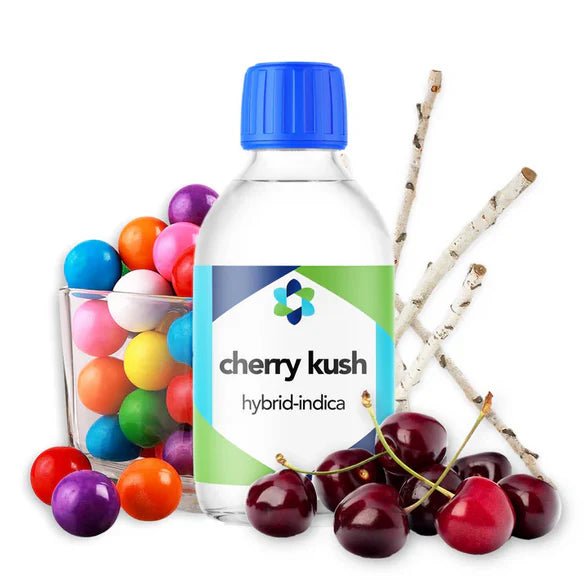
Showing all 5 results
-
Terpenes
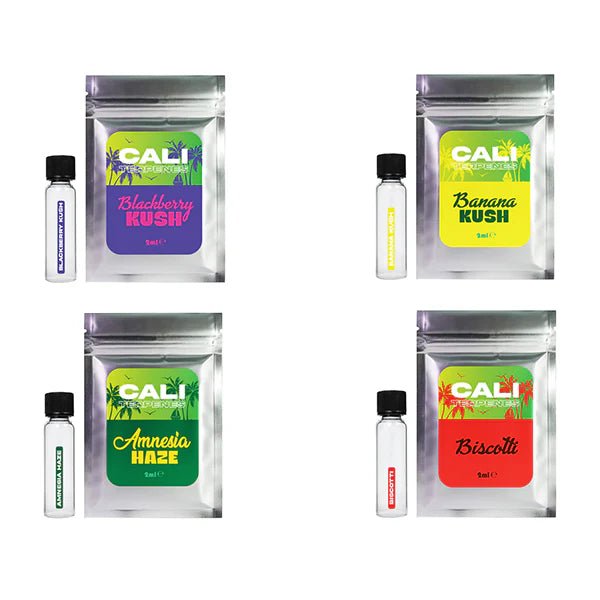
Cali Terpenes Premium USA Grown Terpene Extracts 2ml Canada
$15.99 Select options This product has multiple variants. The options may be chosen on the product page -
Terpenes
Prime Line Collection 100% Terpenes Canada
$24.99 to $199.99 Select options This product has multiple variants. The options may be chosen on the product page -
Terpenes
Purple Dank Strain Profile Premium Terpenes Canada
$7.99 to $189.99 Select options This product has multiple variants. The options may be chosen on the product page -
Terpenes
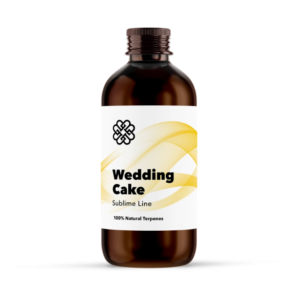
Sublime Line 100% Natural Terpenes Canada
$19.99 to $179.99 Select options This product has multiple variants. The options may be chosen on the product page -
Terpenes
Terpene Warehouse 10ml Terpenes Canada
$49.99 Select options This product has multiple variants. The options may be chosen on the product page
What terpenes actually are
Chemically, terpenes are hydrocarbons built from repeating five carbon isoprene units. Two units make a monoterpene, three make a sesquiterpene, and the larger the molecule the heavier and less volatile it tends to be. That is why citrus notes hit you first and woody notes linger.
Plants produce them for practical reasons rather than for our benefit. They deter herbivores, attract pollinators, and in some cases protect against heat and ultraviolet damage. A single plant typically produces dozens simultaneously, and the ratio between them is what makes one variety smell different from another.
The word terpenoid is often used interchangeably but technically describes a terpene that has been chemically modified, usually by oxidation. Most commercial products contain a mixture of both. Our longer explainer at what terpenes are covers the chemistry in more depth.
The terpenes you will meet most often
A handful of terpenes account for most of what you smell in commercial profiles. Knowing them makes reading a product description far more useful.
- Myrcene. Earthy, musky, faintly herbal. Also prominent in hops and mango, and usually the most abundant terpene in cannabis varieties.
- Limonene. Bright citrus peel. Found in all citrus rinds and widely used in cleaning products for its smell and its solvent properties.
- Pinene. Sharp pine and rosemary. Exists as alpha and beta forms, and is one of the most abundant terpenes in nature.
- Linalool. Floral lavender with a faint spice. The dominant note in lavender and widely used in perfumery.
- Caryophyllene. Black pepper and clove. Unusual among terpenes in having a structure that interacts with the body differently from the others.
- Terpinolene. Fresh, complex, part floral and part herbal. Less common as a dominant note, which makes profiles built on it distinctive.
Strain profiles and how they are built
A strain profile is a blend formulated to match the terpene fingerprint of a named plant variety. Analytical testing establishes which terpenes are present and in what ratio, and the blend is then reconstructed from isolated components.
Profiles fall into two broad types. Botanically derived profiles use terpenes extracted from plants, often not the plant being imitated, since limonene from an orange is the same molecule wherever it comes from. Cannabis derived profiles are extracted from cannabis itself and are considerably more expensive and harder to source.
A good profile smells convincingly like the variety it names. A poor one smells generically sweet or sharply chemical, usually because it uses too few components. More components generally means more convincing, which is why quality varies so much at similar prices.
What people use them for
The most common use in this shop is flavouring an unscented base, whether that is a carrier oil, a wax or an unflavoured liquid. Because terpenes are intensely concentrated, the quantities involved are very small and precision matters.
Aromatherapy is the second use, with terpenes added to diffusers in the same way essential oils are. The third is in food and beverage flavouring, where food grade terpenes are used in tiny quantities to add authentic botanical notes.
Some products in our CBD concentrates range are already terpene rich, and our CBD vapes listings note where terpenes have been reintroduced after extraction. If you are blending your own, start far below what you think is right.
Terpene types compared
Not all terpene products are the same thing, and the differences matter for both price and use.
| Type | Source | Typical use | Cost | Notes |
|---|---|---|---|---|
| Single isolate | Isolated from any plant | Building custom blends | Low | One molecule, precise control |
| Botanical strain profile | Blended from plant terpenes | Recreating a named variety | Moderate | Most common commercial option |
| Cannabis derived profile | Extracted from cannabis | Authentic reproduction | High | Hardest to source, most convincing |
| Food grade flavouring | Food safe isolates | Culinary and beverage | Varies | Must be labelled food grade |
Check what you are buying before you buy it. A bottle labelled simply terpenes could be any of these, and the intended use differs sharply between them.
Handling concentrates safely
Concentrated terpenes are potent chemicals and are never used neat. Undiluted, they can irritate skin and eyes, and some people react to them at surprisingly low concentrations. Treat a bottle with the same respect you would give any concentrated essential oil.
Typical dilution in a carrier sits in the low single digit percentages, and many profiles work at under two percent. Start lower than you think, because adding more is easy and removing it is impossible. Wear gloves when handling neat product and work in a ventilated space.
Keep bottles sealed, cool and out of direct light, since terpenes oxidise and lose their character. Keep them well away from children and pets. If any concentrated product is swallowed, contact your provincial poison centre immediately rather than waiting to see what happens.
What the evidence actually supports
Terpenes are unambiguously responsible for aroma and flavour. That part is simple chemistry and is not in dispute.
Beyond that, claims become much weaker. The idea that specific terpenes reliably produce specific effects in people, sometimes called the entourage effect, is an active research question rather than an established fact. Much of the supporting work is in cell cultures or animal models at concentrations far above anything a person would encounter.
We are not going to tell you a terpene will treat anything, because the evidence does not support it and because health claims on products like these are regulated. Health Canada on cannabinoids sets out the federal position on cannabinoids and related compounds, and the Canadian Centre on Substance Use and Addiction publishes independent material worth reading. If you are considering any of this for a health reason, speak to a clinician.
Storage and shelf life
Terpenes degrade through oxidation, light exposure and heat, in that order of importance. An opened bottle left warm on a windowsill will lose its brightest notes within weeks, while the same bottle closed in a cool cupboard keeps its character for a year or more.
Amber or cobalt glass is used because it filters ultraviolet light. Decanting into clear glass defeats that. Keep the cap tight, since the compounds that make a terpene smell good are exactly the ones that evaporate first.
A profile that has oxidised usually smells flat, slightly sour, or vaguely of turpentine. It is not dangerous but it is no longer doing what you bought it for. Buying smaller bottles you will actually finish is better value than a large one that fades.
Choosing a terpene product
Look for a stated source and a stated grade. Food grade and cosmetic grade are different specifications, and a supplier who will not say which one a product meets is not a supplier worth buying from.
Look for a component list rather than just a strain name. A profile listing its major terpenes tells you what to expect. A bottle that says only the name of a variety tells you nothing about whether it was built from six components or two.
Buy small first. Terpene preference is intensely personal and a profile that one person finds authentic another finds artificial. A small bottle used at low dilution goes a very long way, and the rest of our range, including smokable hemp and accessories, is where most people end up spending more.
Finally, be sceptical of pricing that looks too good. Genuine isolated terpenes are not cheap to produce, and a strain profile sold far below the market rate is usually either heavily diluted in a carrier or built from a handful of components approximating the smell. Neither is dishonest if it is labelled, but both should be priced accordingly.
Blending your own profiles
Building a blend from isolates is the cheapest way to get exactly what you want, and it is more approachable than it sounds. Work by weight rather than by drops, because drop size varies with viscosity and a citrus terpene drops very differently from a woody one.
Start from a dominant note and build around it. Pick one terpene to carry the profile, usually at sixty to seventy percent of the blend, then add two or three supporting notes at much smaller proportions. A little caryophyllene adds depth to almost anything, and a small amount of pinene brightens a blend that has gone flat.
Keep notes. Record the exact proportions of everything you mix, because a blend you like and cannot reproduce is a frustrating outcome. Let a new blend rest for a day or two before judging it, since the components need time to marry. Precision scales make this far easier than trying to count drops.
Canadian rules and delivery
Terpenes themselves are not controlled substances in Canada and are widely used in food, cosmetics and cleaning products. What is regulated is how they are sold and what claims are made about them, and products intended for ingestion must meet the relevant standards, which fall under the Canadian Food Inspection Agency and Health Canada rather than vaping law.
Cannabis itself is regulated under the Cannabis Act and is sold only through provincially authorised retailers. We sell terpene extracts, not cannabis. Vaping products sold alongside these are governed by Tobacco and Vaping Products Act and tracked provincially in vaping laws by province.
We operate an age gate and ship only inside Canada. Carriers and timings are on our shipping and delivery page, and faults on our returns policy page.
Common questions
What are terpenes?
Aromatic hydrocarbon compounds that give plants their smell, built from repeating five carbon units. Pine, citrus peel, lavender, hops and black pepper all owe their character to them. They are volatile, which is why you can smell them from a distance.
Do terpenes get you high?
No. Terpenes are aroma compounds and are not intoxicants. They contribute smell and flavour. Claims that particular terpenes reliably produce particular effects in people are an active research question rather than established fact.
How much terpene should I add to a base?
Far less than you expect. Typical dilutions sit in the low single digit percentages and many profiles work below two percent. Start lower than you think and build up, because adding more is easy and removing it is impossible.
What is the difference between botanical and cannabis derived terpenes?
Botanical profiles are blended from terpenes extracted from any plant, since a given molecule is identical whatever its source. Cannabis derived profiles are extracted from cannabis itself, cost considerably more and are harder to source, but tend to smell more convincing.
How should I store terpenes?
Sealed, cool and out of direct light, in the amber or cobalt glass they came in. They degrade through oxidation, light and heat. An opened bottle left warm loses its brightest notes within weeks, while the same bottle in a cupboard keeps well for a year or more.
Are terpenes legal in Canada?
Yes. Terpenes are not controlled substances and are used widely in food, cosmetics and cleaning products. What is regulated is how they are sold and what health claims are made about them. Cannabis itself is separately regulated and sold only through provincially authorised retailers.