Batteries and Chargers
Removable 18650 and 21700 cells, external chargers with per slot monitoring, cables and cases. The least glamorous part of vaping and the part most worth handling properly. Shipped within Canada.
Batteries are the least glamorous part of vaping and the only part that can genuinely hurt you if treated carelessly. A lithium cell holds a lot of energy in a small aluminium can, and when that energy comes out in an uncontrolled way it does so violently. Nothing on this page is scaremongering: the precautions are simple, cheap and worth taking every time.
This section covers the removable cells used in mods, the chargers that look after them, and the cables and adapters that keep integrated devices running. It also covers how to read a cell, how to know when one is finished, and how to dispose of it properly in Canada.
Showing all 5 results
Cell formats and what the numbers mean
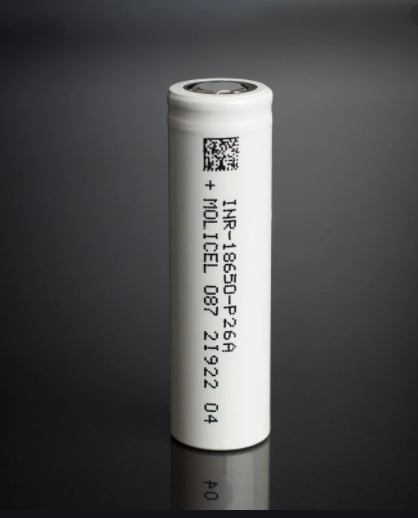
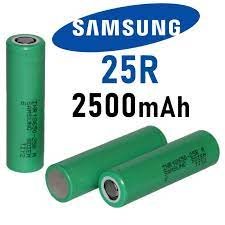
Cell names are dimensions. An 18650 is 18 mm across and 65 mm long. A 21700 is 21 mm across and 70 mm long, which is why it holds noticeably more energy. A 20700 sits between them. The trailing zero is a convention indicating a cylindrical cell.
Capacity is quoted in milliamp hours and tells you how long a cell runs. A typical 18650 holds around 3000 mAh and a typical 21700 around 4000 mAh. Continuous discharge rating, quoted in amps, tells you how hard the cell can be pushed safely, and it matters far more than capacity for anyone running sub ohm coils.
Capacity and discharge rating trade against each other. A very high capacity cell usually has a modest discharge rating, and a high drain cell usually has less capacity. For most regulated mod use, a balanced cell around 3000 mAh with a 20 A continuous rating is the sensible middle.
The rules that are not negotiable
Six habits prevent essentially every battery incident in vaping. None of them is difficult.
- Never carry loose cells in a pocket or a bag with keys or coins. A bridged terminal shorts the cell and it becomes dangerously hot within seconds. Use a plastic case.
- Inspect the wrap every time you handle a cell. A torn wrap or a damaged insulator ring at the positive end is a short waiting to happen. Rewrap it or retire it.
- Keep pairs married in dual cell devices. Buy them together, charge them together, use them together, and never mix ages, brands or charge levels.
- Use cells whose continuous discharge rating comfortably exceeds what your setup draws. Do not rely on the figure printed on a rewrapped cell from an unknown seller.
- Charge on a hard, non flammable surface and never unattended overnight.
- Retire any cell that gets hot in normal use, will no longer hold a charge for a reasonable period, or has visibly swollen.
If a cell ever vents, meaning it hisses and releases hot gas, get it away from anything flammable and do not attempt to pick it up with bare hands. Ventilate the room. This is rare and almost always follows a short or a damaged wrap.
Charging, and why external is better
Most modern devices charge over USB C, which is convenient and perfectly adequate. What in device charging does not do well is balance a pair of cells or tell you anything about their condition.
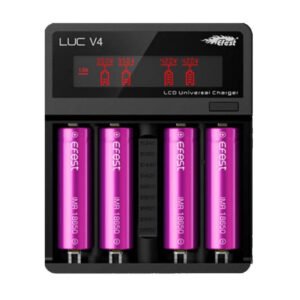
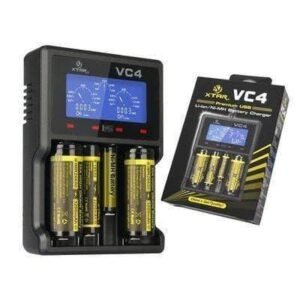
An external charger with independent slots charges each cell separately, terminates each one correctly, and usually reports voltage and capacity per slot. That last feature is the useful one: it lets you see a cell losing capacity over time, so you retire it deliberately rather than discovering it has failed.
Use the supplied cable and an ordinary phone plug rather than a high output laptop charger, which can push more current than a small cell expects. Cheap unbranded chargers are a false economy, because the job they are doing is terminating a lithium charge cycle correctly and doing it badly is exactly the problem you are trying to avoid.
Cell and charging options compared
The table sets out the formats and how they suit different setups. Comfortable power assumes a regulated device and a coil inside its printed range.
| Option | Typical capacity | Continuous rating | Comfortable use | Notes |
|---|---|---|---|---|
| Integrated battery | 1500 to 3000 mAh | Set by the device | Up to about 40 W | Nothing to handle, charge over USB C |
| 18650 | 2500 to 3500 mAh | 15 to 25 A | Up to about 40 W single | The long standing standard |
| 21700 | 4000 to 5000 mAh | 15 to 30 A | Up to about 60 W single | More runtime, slightly larger device |
| Dual cell setup | 6000 mAh and above | As the weaker cell | 60 W and above | Requires married pairs |
Whichever you choose, the device matters as much as the cell. A regulated mod enforces cut offs a cell cannot enforce for itself, which is why we do not stock unregulated devices.
How long a cell lasts and when to retire it
A lithium cell in vaping use typically gives 300 to 500 full charge cycles before capacity falls noticeably, which for most people is somewhere between one and two years. It does not fail suddenly so much as fade.
The signs are consistent: runtime shortens, the device reports low battery earlier in the day, the cell feels warmer than it used to during use, and an external charger reports a measured capacity well below the printed figure. Any of those means it is time.
Partial charge cycles are gentler than deep ones, so topping up before a cell is flat extends life. Heat is the other major factor, which is why a cell left in a hot car ages far faster than one kept indoors. Deep cold does not permanently damage a cell but temporarily reduces available capacity, which we cover in vaping in cold weather.
Cables, adapters and the small parts
USB C has become close to universal on vaping hardware, which means a cable you already own will usually work. Keeping a spare in a bag prevents the dead device afternoon, and cables do wear out at the connector rather than in the middle.
Not all cables are equal. A charge only cable will work but may charge slowly. A damaged cable that works intermittently is worth replacing rather than wiggling, because an interrupted charge cycle is harder on a cell than a clean one.
The other small parts worth having are a plastic cell case, a cleaning brush, isopropyl alcohol for contacts and spare O rings. All of these live in our accessories range and cost very little compared with the inconvenience of not having them.
Travelling with lithium cells
Lithium cells must travel in cabin baggage and never in checked luggage, because a fire in the hold cannot be reached. This applies to loose cells, cells inside a device, and power banks alike.
Loose cells must be individually protected against short circuit, which in practice means a plastic case or tape over the terminals. Airlines will ask, and they are within their rights to refuse a cell carried loose. Transport Canada lithium battery rules sets out the current Canadian position and it is worth checking before each trip rather than assuming.
Empty tanks before flying, since cabin pressure changes push liquid past seals. Our guide to taking a vape on a plane covers the practical steps for the whole setup rather than just the battery.
Recycling cells properly in Canada
Lithium cells must never go in household waste. A cell crushed in a collection truck or a sorting facility can ignite, and this is a genuine and growing cause of fires in Canadian waste facilities rather than a theoretical risk.
Almost every Canadian municipality operates battery drop off points, and many hardware and electronics retailers accept them too. Tape over the terminals before you drop a cell off, which prevents it shorting against other batteries in the collection bin.
The same applies to disposable vapes, which contain a sealed lithium cell that most people do not think about. Our disposable vapes range covers that in more detail. If a cell has swollen, do not puncture or compress it, and tell the drop off point what you are handing over.
Battery myths worth discarding
Several pieces of folklore circulate about lithium cells and most of them come from an older chemistry. Nickel cadmium batteries genuinely had a memory effect that rewarded full discharge cycles. Lithium cells do not, and running one flat every time actively shortens its life.
The idea that a cell must be fully charged before first use is also a leftover. Cells ship at a storage charge of around half capacity because that is the gentlest state to sit in, and you can use one straight out of the packet.
Freezing a battery to revive it is actively harmful. Cold reduces available capacity temporarily and condensation inside the cell when it warms is genuinely damaging. Finally, a higher capacity cell is not automatically better. For sub ohm use the continuous discharge rating matters more, and the two trade against each other. If you run low resistance replacement coils at high wattage, choose for discharge rating and accept less runtime.
Canadian rules and delivery
Batteries and chargers are hardware and contain no nicotine, though they are sold alongside products governed by Tobacco and Vaping Products Act. Provincial rules on vaping products are tracked in vaping laws by province.
We ship only inside Canada behind an age gate, with carriers and timings on our shipping and delivery page. Cells are shipped in line with the dangerous goods rules that apply to lithium, which is why they cannot be sent by every service.
Faults are covered on our returns policy page. A cell that has been damaged through use, carried loose, or charged on an unsuitable charger is not a manufacturing fault, but a cell that arrives with a torn wrap or fails immediately is, and we will replace it.
Common questions
What is the difference between an 18650 and a 21700?
The numbers are dimensions. An 18650 is 18 mm by 65 mm, a 21700 is 21 mm by 70 mm. The larger cell holds noticeably more energy, typically around 4000 mAh against 3000 mAh, which means longer runtime at the cost of a slightly larger device.
Can I carry a spare battery in my pocket?
Not loose. Keys and coins bridge the terminals, and a shorted lithium cell becomes dangerously hot within seconds. Always use a plastic cell case, which costs very little and removes the risk entirely.
How do I know when a battery needs replacing?
Runtime shortens, the device reports low battery earlier each day, the cell runs warmer than it used to, or an external charger reports a measured capacity well below the printed figure. Retire any cell that swells or gets hot in normal use immediately.
Is it safe to charge my vape overnight?
We would not. Charge on a hard non flammable surface while you are around, and use the supplied cable with an ordinary phone plug rather than a high output laptop charger. An external charger with per slot termination is gentler than charging inside a device.
Can I take vape batteries on a plane in Canada?
Only in cabin baggage, never in checked luggage, whether loose, in a device or in a power bank. Loose cells must be individually protected against short circuit with a case or tape over the terminals. Check the current Transport Canada position before each trip.
How should I dispose of an old vape battery?
At a battery drop off point, never in household waste. Tape over the terminals first so it cannot short against other batteries in the bin. Most Canadian municipalities and many electronics retailers accept them.