Vape Mods
Regulated box mods with precise wattage control, resistance readout and full safety protection. Single and dual cell devices for vapers who want control and all day endurance. Shipped within Canada.
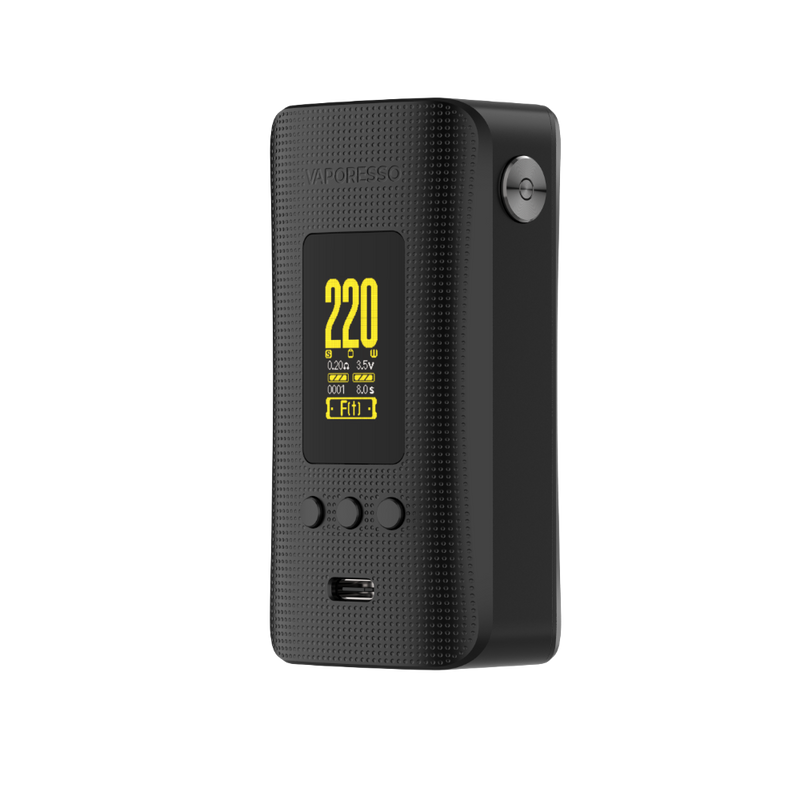
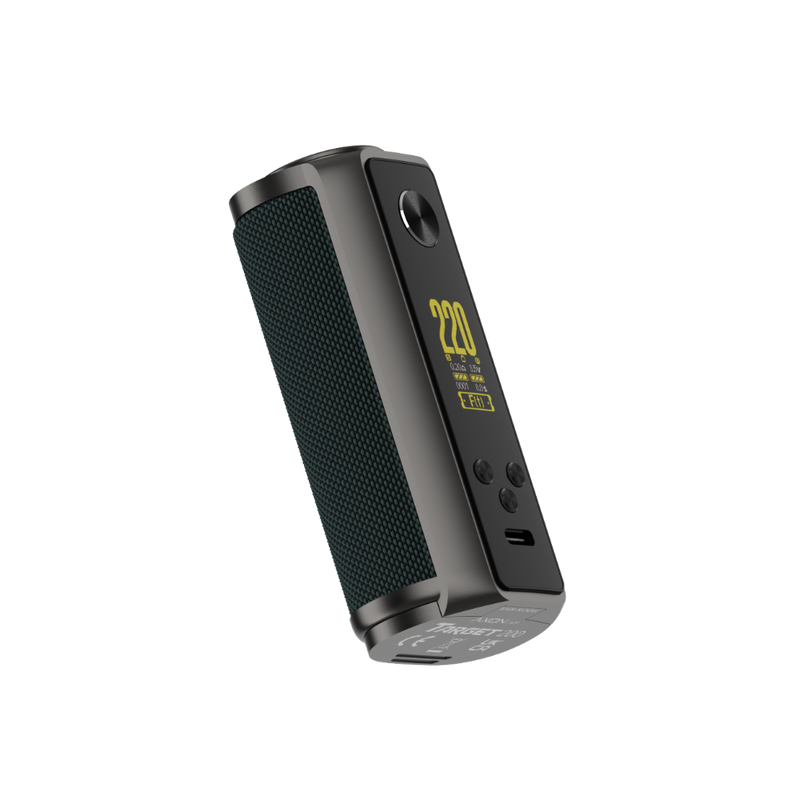
A mod is the power unit of an advanced vaping setup. The name is a leftover from the era when people genuinely modified torch bodies to fire a coil, and it stuck even though every mod sold today is a purpose built regulated device with a chipset, a screen and a stack of safety protections.
What a mod buys you is control and endurance. You set the wattage precisely, you read the coil resistance before you fire, and you carry enough battery to last a heavy day. What it demands in return is that you understand what you are doing, particularly around removable cells. This page covers regulated against mechanical, wattage, batteries, safety and what actually matters when choosing one.
Showing all 5 results


Regulated mods, and why mechanical ones are not here
A regulated mod contains a chipset between the battery and the coil. That chip reads the coil resistance, delivers exactly the wattage you asked for regardless of how charged the battery is, and refuses to fire if something is wrong. Short circuit protection, over temperature cut off, reverse polarity protection and a ten second cut off are all standard.
A mechanical mod has none of that. It is a tube, a battery and a switch, with the coil connected directly to the cell. There is no protection of any kind, and a wiring mistake or a damaged battery wrap has nowhere safe to go. Building for one requires understanding Ohm law and battery discharge limits properly rather than approximately.
We stock regulated mods only. That is a deliberate decision rather than a gap in the range, because the failure mode on an unregulated device with a bad build is a lithium cell venting in someone hand. If you want more control, a regulated mod gives you all of it with a chip watching for mistakes.
Wattage, resistance and the relationship between them
Wattage is how much power the mod pushes into the coil. Resistance, measured in ohms, is how much the coil resists that power. Together they determine how hot the coil runs, how fast it heats and how much vapour you get.
Every coil carries a printed wattage range, and that range is not a suggestion. Below it the coil under performs and the flavour is muted. Above it the cotton cannot wick fast enough to keep up with the heat and it scorches, usually within a few draws. The correct method is to start at the bottom of the printed range and step up one watt at a time until the flavour peaks, then stop there.
Lower resistance coils need more wattage and produce more vapour. They also demand much lower nicotine, because you are inhaling considerably more aerosol per puff. Running 20 mg salt nicotine through a 0.15 ohm coil at 70 W is genuinely unpleasant and is the classic mistake people make when they move up from a pod system. Our nicotine strength calculator explains how strength and hardware interact.
Removable cells and battery safety
Mods split into integrated battery and removable cell designs. Integrated is simpler and safer: you charge it over USB C and there is nothing to handle. Removable cells, usually 18650 or 21700, let you carry spares and replace tired cells years later rather than replacing the whole device.
Removable cells come with real obligations. Use cells from a reputable manufacturer with a continuous discharge rating that comfortably exceeds what your build draws. Keep married pairs together, charged and used as a set, and never mix cells of different ages or charge levels in a dual battery mod. Inspect the wrap every time you take a cell out, and rewrap or retire any cell whose plastic is torn or whose insulator ring is damaged.
Never carry loose cells in a pocket. Keys and coins bridge the terminals and a shorted lithium cell gets dangerously hot in seconds. A plastic case costs almost nothing and is in our batteries and chargers range alongside chargers. Charge in an external charger on a hard surface rather than leaving a mod charging unattended overnight.
| Configuration | Typical capacity | Comfortable power | Size | Best for |
|---|---|---|---|---|
| Integrated battery | 1500 to 3000 mAh | Up to about 40 W | Slimmest | Simplicity, no cells to handle |
| Single 18650 | About 3000 mAh | Up to about 40 W | Compact | Light sub ohm use, portability |
| Single 21700 | About 4000 mAh | Up to about 60 W | Slightly larger | A good balance for most people |
| Dual 18650 or 21700 | 6000 mAh and above | 60 W and above | Largest | Heavy sub ohm use, endurance |
The features worth paying for
A clear screen that shows resistance, wattage and battery level at a glance is the single most useful feature. You should be able to read the coil resistance before you fire, because a sudden change in that number is the earliest warning that a coil is failing or a connection is loose.
Adjustable wattage in half watt or single watt steps matters more than a high maximum. Almost nobody needs 200 W, and a mod that only steps in fives is frustrating when the sweet spot sits between them. A firing button that is comfortable under the thumb and a 510 connection with a spring loaded pin are both worth more than they sound.
Temperature control caps coil temperature rather than power and does genuinely prevent dry hits, but it only works with specific coil wire materials and needs setting up correctly. Most people never use it. Bluetooth connectivity and colour animations add cost and failure points without adding anything.
Choosing a mod that fits how you vape
Start with battery life. A single 18650 mod is compact and will not see a heavy vaper through a day at sub ohm wattages. A dual 18650 or single 21700 mod will. If you are running above 50 W regularly, go dual or 21700 and stop thinking about it.
Then consider size and weight honestly. A dual battery mod with a large tank is a substantial object and it will not disappear into a shirt pocket. Plenty of people buy one, find it too bulky for daily carry, and end up back on a pod system. If portability matters more than endurance, our vape pens and vape pods ranges are the better fit.
Finally, check what tank you intend to pair it with. A mod is only half the setup, and the vape tanks you choose determines the draw style, the coil options and the liquid you should be buying.
Pairing a mod with the right tank
Sub ohm tanks with wide airflow suit direct lung vaping at higher wattages and low nicotine. Restricted direct lung tanks narrow the draw slightly and work well in the 25 W to 45 W band. Mouth to lung tanks use high resistance coils, tight airflow and modest power, and pair perfectly well with a mod even though people associate mods with clouds.
There is no rule that a mod must be run at high power. A mod with a mouth to lung tank at 14 W is a genuinely excellent setup: you get precise control, all day battery and a cigarette like draw with higher nicotine. It is one of the most underrated configurations in vaping.
Whatever you pair, match the liquid. High VG vape juice for sub ohm coils, thinner 50/50 for mouth to lung coils. Getting this wrong produces burnt coils within days and is far more often the cause than a faulty tank.
Keeping a mod reliable
Mods fail at connections far more often than they fail electronically. The 510 pin collects liquid from tanks above it, and that residue insulates the contact until the mod starts reporting no atomiser or firing intermittently. A cotton bud with a little isopropyl alcohol every couple of weeks prevents almost all of it.
Keep the battery door and the cell contacts clean and dry for the same reason. If a mod starts reporting a resistance that jumps around between firings, suspect the connection before you suspect the coil, and suspect the coil before you suspect the mod.
Update firmware if the manufacturer offers it, since chipset bugs are real and fixes are free. Keep the device out of hot cars and out of prolonged deep cold, which we cover in vaping in cold weather. Spare glass, seals and coils are in our replacement coils and accessories ranges.
What the error messages actually mean
No atomiser or check atomiser means the mod cannot read a coil. Nine times out of ten that is a dirty 510 connection, a coil not screwed down fully, or a tank whose pin has been pushed flush by overtightening.
Atomiser short means the chip has detected a resistance close to zero and refused to fire, which is the protection doing its job. Reseat the coil, check nothing is touching that should not be, and try a different coil before assuming the mod is broken.
Atomiser low means resistance below what the mod supports, usually a coil the device was not designed for. Battery low means what it says. Ten second cut off means you held the button too long, which is a safety feature rather than a fault. Our wider troubleshooting walkthrough at why a vape stops hitting covers the symptoms that are not accompanied by a message.
Canadian rules and delivery
Vaping hardware and liquid in Canada sit under Tobacco and Vaping Products Act, which caps retail nicotine at 20 mg/mL and restricts packaging and promotion. Provincial rules add minimum ages and flavour restrictions, tracked in vaping laws by province.
We operate an age gate and ship only inside Canada. Carriers and timings are on our shipping and delivery page. Lithium cells, loose or installed, must travel in cabin baggage rather than checked luggage, as Transport Canada lithium battery rules sets out, and loose cells must be individually protected against short circuit.
If you are new to this and a mod looks like a lot of device, it probably is. best vape for beginners in Canada is a more useful starting point, and Health Canada guidance on vaping publishes the federal position on vaping generally.
Common questions
What is the difference between a mod and a vape pen?
A mod has a chipset that lets you set wattage precisely, reads coil resistance and enforces safety cut offs, and usually carries far more battery. A pen has a fixed or nearly fixed output and a smaller cell. A mod offers control and endurance, a pen offers pocketability and simplicity.
Do you sell mechanical mods?
No, deliberately. A mechanical mod connects the cell directly to the coil with no chipset, no short circuit protection and no cut off, so a wiring error or a damaged battery wrap has nowhere safe to go. A regulated mod gives you the same control with a chip watching for mistakes.
What wattage should I set?
Inside the range printed on the coil, starting at the lowest number and stepping up one watt at a time until the flavour peaks. Above the printed range the cotton cannot wick fast enough and scorches. A higher maximum wattage on the device is close to irrelevant.
What batteries should I use in a mod?
Cells from a reputable manufacturer with a continuous discharge rating comfortably above what your build draws, usually 18650 or 21700. Keep pairs married, charged and used together, never mix ages or charge levels, and replace any cell with a torn wrap. Never carry loose cells in a pocket.
Why does my mod say no atomiser?
Almost always a connection rather than a fault. Liquid residue on the 510 pin insulates the contact, a coil is not seated fully, or overtightening has pushed the tank pin flush. Clean the connection with isopropyl alcohol, reseat the coil, and try a different coil before blaming the mod.
Can I use high strength nicotine in a mod?
Not with sub ohm coils. A low resistance coil at high wattage delivers several times the aerosol of a pod system per puff, so 20 mg salt nicotine becomes overwhelming. Use 3 mg to 6 mg freebase for sub ohm setups. A mod paired with a mouth to lung tank can take higher strengths.