Brands
This is the top level of our brand listings, covering seventeen manufacturers across every format we sell. It exists to make the catalogue navigable, because brand is often how people shop even though it is rarely the most useful way to choose.
What follows groups those seventeen by what they actually make rather than by name, explains the trade offs between the groups, and points at the individual brand pages where the detail lives. If you already know what format you want, our category pages are the faster route.
Showing 13 to 24 of 95 results

Four groups, not seventeen brands
Almost every brand here belongs to one of four groups, and the group matters far more than the name on the box. Choose the group first and the brand choice inside it becomes much simpler.
The first group is closed pod systems: a device you keep with sealed pods you cannot refill. Vuse and STLTH are the two here, with Level X sitting close by on a similar model.
The second is disposable specialists, the third is refillable pod and mod hardware, and the fourth is the brands that span more than one of those. Each section below covers one group.
Closed and part closed pod systems
Vuse is owned by British American Tobacco and is the most conservative option here: consistent manufacturing, reliable Canadian supply and a deliberately closed ecosystem. The ePod and Alto take sealed pods and the Go series covers disposables.
STLTH is Canadian, uses magnetic sealed pods and has the widest pod availability in the country, which matters more than it sounds because a closed system is only as good as its pod supply. Level X is also Canadian and sits between closed and refillable, with a device you keep, pods you swap and bottled liquid available.
The argument for this group is that there is nothing to learn and nothing to maintain. The argument against is that you cannot choose your own liquid and the running cost is higher than refilling.
Disposable specialists
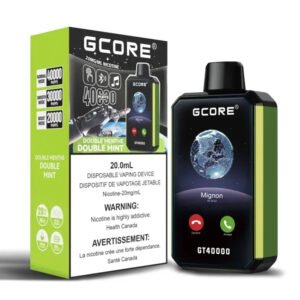
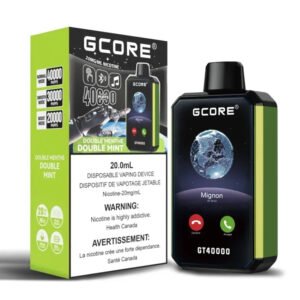
Six brands here sell disposables as their main business. Gcore competes almost entirely on capacity, running up to forty thousand rated puffs. Vice and Breeze both run wide capacity ladders, which makes them easy to match to how much you actually vape.
Elf Bar is the brand that made the category mainstream and still sets the reference with the BC5000. Lost Mary is its design led relative with the widest price spread we carry, from $14.99 up. Geek Bar leans on screens and switchable power modes rather than raw capacity.
Everything in our disposable vapes guidance applies across all of them: compare millilitres rather than puff counts, expect roughly half the rated figure in real use, and recycle the lithium cell rather than binning it.
Refillable pod and mod hardware
Five brands here are built around refilling. Uwell made its name with the Caliburn, still the reference for a tight mouth to lung draw, and also fields sub ohm tanks. OXVA runs the consistent Xlim platform with the cheapest consumables in the shop.
Voopoo runs the PnP coil platform across its Drag and Argus lines. Vaporesso is the broadest range we carry, spanning a $10.99 pod device up to a 200 watt dual battery mod. SMOK is the veteran, and the most mod focused.
OVNS sits below all of them as the value entry point, with pod kits from $19.99. The argument for this whole group is control and a much lower running cost, in exchange for filling pods and priming coils yourself.
Brands that span more than one group
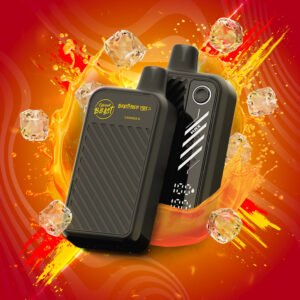
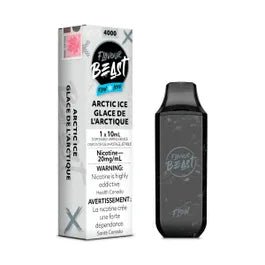
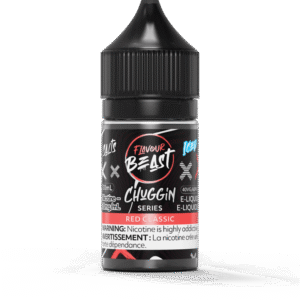
Three Canadian brands deliberately cover more than one format, and that is their main point of difference. Flavour Beast sells disposables, a zero nicotine option and bottled salt nicotine liquid.
Allo goes further, adding refillable Sync pods alongside its Ultra disposables and bottled liquid, which gives a complete route from disposable to refillable without changing brand.
That matters because the usual obstacle to moving off disposables is not cost but flavour. People resist switching because they do not want to lose a profile they have settled on, and a brand offering the same flavours in both formats removes the objection entirely.
The four groups compared
Read across the row. The differences between groups are far larger than the differences between brands inside a group.
| Group | Up front cost | Running cost | Liquid choice | Maintenance | Brands |
|---|---|---|---|---|---|
| Closed pod | Low | Higher | None, sealed pods only | Almost none | Vuse, STLTH, Level X |
| Disposable | None | Highest | None | None | Gcore, Vice, Breeze, Elf Bar, Lost Mary, Geek Bar |
| Refillable | Moderate | Lowest | Any liquid | Filling and priming | Uwell, OXVA, Voopoo, Vaporesso, SMOK, OVNS |
| Spanning both | Varies | Varies | Depends on format | Depends on format | Flavour Beast, Allo |
If you are unsure, the honest general answer is a refillable pod device. It costs a little more at the outset, considerably less thereafter, and covers almost everyone. Our vape kits range is where to start.
The Canadian brands and why that matters
Five of the seventeen are Canadian: STLTH, Vice, Allo, Flavour Beast and Level X. That has two practical consequences worth knowing.
The first is formulation. Canadian brands build to the federal 20 mg/mL nicotine cap from the outset rather than producing reduced versions of something designed for a market with a higher ceiling, and the flavour development follows the same logic.
The second is supply. A brand focused on this market is generally more reliable on availability than one treating Canada as a secondary territory, which matters most for any pod system where an unavailable consumable makes the device useless.
None of that makes the international brands a worse buy. Elf Bar, Lost Mary, Geek Bar and Gcore are all widely stocked here and perfectly well supplied. It simply means that when two options look equivalent on paper, the one built for this market is usually the safer of the two.
A practical way to choose
Start with the format rather than the brand. Decide whether you want something with nothing to maintain, something with the lowest running cost, or something in between. That single decision narrows seventeen brands to a handful.
Then decide on draw style, because it determines nicotine strength. A tight cigarette like draw suits higher salt nicotine and is what most former smokers want. An open airy draw needs much lower nicotine and a different kind of hardware entirely. Our nicotine strength calculator matches strength to hardware.
Only then look at brands, and at that point check one thing above all: whether the consumables are actually stocked in Canada. A device whose pods or coils are no longer imported is an expensive paperweight, and it is the most common reason people abandon hardware they otherwise liked.
Where to read further
Each brand above has its own page covering the specific models, prices, consumables and the problems peculiar to that hardware. If you know the brand you want, that is the place to go.
If you know the format instead, our category pages are more useful: disposable vapes, vape pods, vape kits, vape mods, vape tanks, replacement coils and vape juice each cover their subject properly.
If you are new to all of it, start with best vape for beginners in Canada rather than with any product page, including this one. Our vaping versus smoking cost calculator and refillable versus disposable vapes comparison are the two things most likely to change what you buy.
Consumables, and the question nobody asks first
The most expensive mistake in vaping is not buying the wrong device. It is buying into a system whose consumables you cannot reliably get, which turns a device you liked into a paperweight.
Three things decide this. The first is whether the brand treats Canada as a primary market or a secondary one, which is much of the argument for the Canadian brands above. The second is whether the brand keeps a pod or coil format stable across generations, as OXVA does with Xlim and Voopoo does with PnP, or replaces it each cycle as several others have. The third is simply how long the brand has been around, since a manufacturer with a decade of history generally supports parts far longer than a newcomer.
Before buying any pod system, check that its specific pods are listed and in stock rather than assuming. Our listings name the compatible device on every consumable for exactly this reason, because a coil that physically fits is not always the correct coil, and opened packs cannot be returned.
Canadian availability and the rules that apply
Every brand we carry product we list sits at or under the federal 20 mg/mL nicotine cap set out in Tobacco and Vaping Products Act. That is why Canadian versions are not directly comparable to the same model sold in markets with a higher ceiling, which is worth knowing if you are reading international reviews.
Flavour availability is decided provincially rather than federally, so the range on offer differs depending on where you live, and we track the current picture in vaping laws by province. For any globally sold brand, much of the online review material describes versions formulated for markets with a higher nicotine ceiling, which Canadian units are not.
We operate an age gate on every visit and ship only inside Canada in Canadian dollars. Carriers, timings and tracking are on our shipping and delivery page and faults on our returns policy page. Anything containing a lithium cell travels in cabin baggage rather than checked luggage when flying, as Transport Canada lithium battery rules requires, and our guide to taking a vape on a plane covers the rest.
Common questions
Which vape brand is best?
The wrong question, honestly. Format matters far more than brand. Decide whether you want a closed pod system with nothing to maintain, a disposable with no up front cost, or a refillable device with the lowest running cost, and the brand choice inside that group becomes much simpler.
Which brands are Canadian?
STLTH, Vice, Allo, Flavour Beast and Level X. They build to the federal 20 mg/mL nicotine cap from the outset rather than producing reduced versions of something designed elsewhere, and supply into Canada is generally more reliable.
What is the difference between a closed and a refillable system?
A closed system uses sealed pods you cannot refill, so there is nothing to learn but you cannot choose your liquid and the running cost is higher. A refillable system lets you fill from any bottle, costs far less per millilitre, and asks you to prime coils and handle liquid.
Which brand is cheapest to run?
Among refillable brands, OVNS and OXVA have the cheapest consumables in our listings, at $9.99 for three pods. Any refillable setup costs far less to run than disposables or closed pods at the same consumption, and the gap widens the more you vape.
Does it matter if a brand stops being imported?
For any pod system, enormously. A device whose pods or coils are no longer available is unusable, and it is the most common reason people abandon hardware they otherwise liked. Check consumable availability before buying into any system.
Which brand should I start with if I am quitting smoking?
Look for a tight mouth to lung draw at a higher salt nicotine strength, which is what suits that transition. Uwell Caliburn is the reference for that draw among refillables, and STLTH or Vuse if you want a closed system with nothing to maintain.