Cannabis Seeds
Cannabis seeds are sold here as collectable souvenir items. This is the largest single category in the shop by product count, covering feminised, autoflowering and regular seeds across a wide range of named varieties, and the terminology attached to them is the most confusing in this catalogue.
What follows explains what those terms actually mean, how varieties are described and classified, and how seeds are stored so they remain viable. It also states plainly where germination sits in Canadian law, which is a question this category cannot honestly avoid.

Showing 49 to 60 of 127 results
-
Cannabis Seeds
Do-Si-Dos Auto Cannabis Seeds
$12.99 to $34.99 Select options This product has multiple variants. The options may be chosen on the product page -
Cannabis Seeds
Forbidden Fruit Auto Feminised Cannabis Seeds
$12.99 to $34.99 Select options This product has multiple variants. The options may be chosen on the product page -
Cannabis Seeds
Forbidden Fruit Feminised Cannabis Seeds
$12.99 to $34.99 Select options This product has multiple variants. The options may be chosen on the product page -
Cannabis Seeds
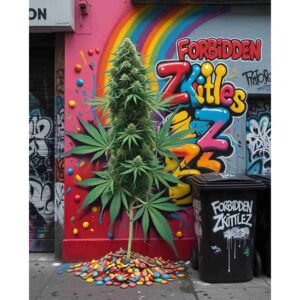
Forbidden Zkittlez Feminised Cannabis Seeds
$12.99 to $34.99 Select options This product has multiple variants. The options may be chosen on the product page -
Cannabis Seeds
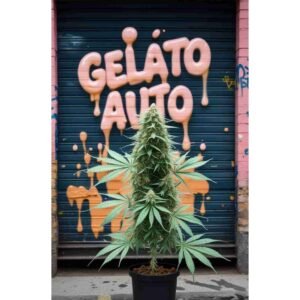
Gelato Auto Cannabis Seeds
$12.99 to $34.99 Select options This product has multiple variants. The options may be chosen on the product page -
Cannabis Seeds
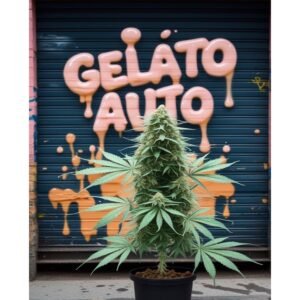
Gelato Auto Cannabis Seeds, Feminised
$12.99 to $34.99 Select options This product has multiple variants. The options may be chosen on the product page -
Cannabis Seeds
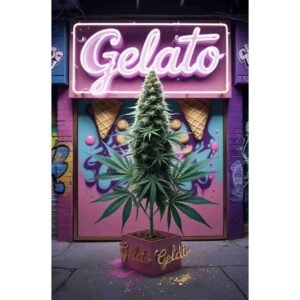
Gelato Cannabis Seeds, Feminised
$12.99 to $34.99 Select options This product has multiple variants. The options may be chosen on the product page -
Cannabis Seeds
Gelato Feminised Cannabis Seeds
$12.99 to $34.99 Select options This product has multiple variants. The options may be chosen on the product page -
Cannabis Seeds
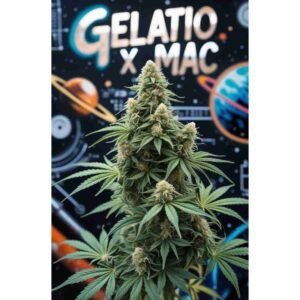
Gelato x MAC Feminised Cannabis Seeds
$12.99 to $34.99 Select options This product has multiple variants. The options may be chosen on the product page -
Cannabis Seeds
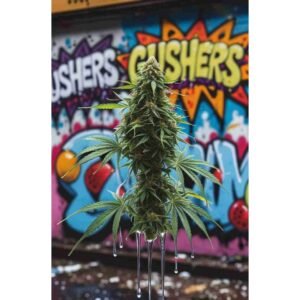
Gelato x Triangle Kush (AKA Gushers) Feminised Cannabis Seeds
$12.99 to $34.99 Select options This product has multiple variants. The options may be chosen on the product page -
Cannabis Seeds
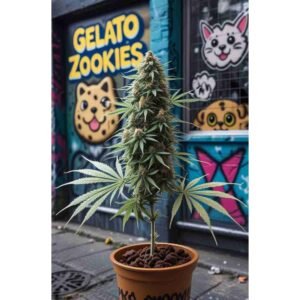
Gelato x Zookies Feminised Cannabis Seeds
$12.99 to $34.99 Select options This product has multiple variants. The options may be chosen on the product page -
Cannabis Seeds
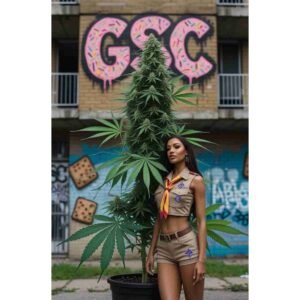
Girl Scout Cookies (GSC) Feminised Cannabis Seeds
$12.99 to $34.99 Select options This product has multiple variants. The options may be chosen on the product page




Feminised, autoflowering and regular
Regular seeds produce both male and female plants in roughly equal proportion, the way the species reproduces naturally. They are what breeders work with, because you need both sexes to make new crosses.
Feminised seeds are produced so that almost every seed is female. The technique involves inducing a female plant to produce pollen, which then carries only female genetics. Because the vast majority of a feminised packet will be female, it is the format most commonly bought.
Autoflowering varieties carry genetics from Cannabis ruderalis, a hardy subspecies adapted to short northern summers. Rather than switching stage in response to changing daylight, they switch on age alone. They are typically smaller, faster and more forgiving, at the cost of lower yield and less room to influence the outcome.
Indica, sativa and why the labels are unreliable
Varieties are conventionally described as indica, sativa or hybrid. In the traditional framing, indica describes shorter, broader leafed plants with a faster finish, and sativa describes taller, narrower leafed plants that take longer.
Those terms are genuinely useful as descriptions of plant shape and growth habit, which is why growers still use them. They are far less reliable as predictions of anything else. Decades of crossing mean almost everything commercially available is a hybrid, and modern genetic analysis repeatedly finds that the label on a packet correlates poorly with the plant actual ancestry.
What does carry information is the terpene profile, which is what produces the aroma and the character people actually describe. Our guide to terpenes explains those compounds, and our terpenes range sells them in isolation.
Reading a seed listing
Flowering time is the number of weeks from the start of flowering to harvest for photoperiod varieties, or the total life cycle for autoflowering ones. It is the single most practical figure in a listing.
Height is usually given as a range and depends heavily on conditions, so treat it as relative rather than absolute. Yield figures are quoted per square metre indoors or per plant outdoors and represent what an experienced grower achieved in good conditions, which makes them optimistic by nature.
Lineage tells you what was crossed to produce the variety and is often the most informative part of a listing, because a cross between two well known parents tells you more than any marketing adjective. Named varieties are not standardised across breeders, so the same name from two sources can be genuinely different plants.
Seed types compared
The table sets out the practical differences between the three types.
| Type | Sex outcome | Triggered by | Typical size | Cycle length | Suited to |
|---|---|---|---|---|---|
| Regular | Roughly half female | Light cycle | Variable | Longer | Breeding and selection work |
| Feminised | Almost all female | Light cycle | Variable | Longer | The most commonly bought format |
| Autoflowering | Depends, often feminised | Age alone | Smaller | Shortest | Short seasons, low intervention |
| Autoflowering regular | Roughly half female | Age alone | Smaller | Shortest | Breeding autoflower lines |
The choice between them is really a choice about control. Photoperiod varieties give you influence over when the plant changes stage. Autoflowering varieties take that decision away and finish on their own schedule regardless.
Judging seed quality
Mature, viable seeds are generally firm, with a hard shell and a darker colour, often with a marbled or tiger striped pattern. They should feel solid rather than hollow and should not deform when pressed gently between fingers.
Pale, greenish or whitish seeds are usually immature and far less likely to be viable. Seeds that crack or crush under light pressure are old, damaged or were never properly formed. Some variation in size and colouring within a packet is normal and is not in itself a sign of a problem.
Appearance is an imperfect guide, and a plain looking seed from a well stored batch will often outperform a handsome one that has sat in a warm drawer for three years. Storage history matters more than looks.
Storing seeds so they stay viable
Seeds are living material in a dormant state, and the enemies are the familiar ones: heat, light, moisture and fluctuation. Kept properly, viability is measured in years. Kept badly, it can fall away within months.
Store in an airtight container in a cool, dark, dry place at a stable temperature. A cupboard away from any heat source is fine. Adding a desiccant pack protects against humidity, which is the factor most often underestimated.
Temperature stability matters more than achieving any particular temperature. Repeated cycling between warm and cold does more damage than sitting consistently at room temperature, which is why the fridge door is one of the worst places to keep them. Keep them in their original labelled packaging so you know what you have.
What the named varieties tell you
Names in this category come from several directions. Some describe the aroma directly, which is why so many reference citrus, fuel, cheese, berries or baked goods. Some are geographic, pointing at a landrace origin such as Afghan, Thai or Colombian. Some are simply breeder branding.
Classic names that recur across many breeders, such as Northern Lights, Amnesia Haze, White Widow, Skunk and OG Kush, are widely crossed foundation lines rather than single fixed plants. Two packets carrying the same classic name from different breeders can be meaningfully different.
Cross names joined with an x, in the form of one parent crossed with another, are the most informative of all, because they tell you exactly what went into the plant. If you are choosing between listings, lineage is worth more attention than the name itself.
A final note on the haze and kush families in particular, since they appear so often. Haze lines descend from long flowering equatorial sativas and tend to take considerably longer to finish. Kush lines trace to the Hindu Kush region and tend to be shorter and faster. Those two words genuinely do carry information about growth habit, which is more than can be said for most of the naming in this category. Our smokable hemp range uses many of the same profile names.
Landraces, hybrids and where varieties come from
Landrace varieties are populations that adapted over a long period to one place without deliberate breeding. Afghan, Thai, Colombian, Durban and Hindu Kush are the names that recur, and they are the raw material almost every modern variety descends from.
Modern breeding began by crossing landraces to combine traits, then stabilising the result over several generations so it reproduced predictably. That stabilisation is what separates a finished variety from a one off cross, and it takes years. A breeder selling an F1 cross and a breeder selling a line stabilised over six generations are selling quite different things even if the name looks similar.
This is why lineage in a listing matters more than the name. A cross between two well documented parents tells you what traits are in the mix. A proprietary name with no stated parentage tells you nothing verifiable at all, and in a category with no naming standard that distinction is worth paying attention to.
Common mistakes when buying seeds
The first is assuming a name means the same thing everywhere. There is no naming authority in this category, so two packets of the same classic name from different breeders can be genuinely different plants with different lineage.
The second is treating yield figures as a promise. Those numbers represent what an experienced grower achieved in good conditions, which makes them optimistic by construction rather than dishonest. Treat them as relative comparisons between varieties rather than as forecasts.
The third is buying on price alone. Seeds are cheap relative to everything else involved, and the difference between a well kept batch from a careful breeder and a cheap one stored badly shows up in viability, which is the only thing that actually matters. The fourth is poor storage after purchase, which undoes a good buying decision faster than anything else.
Germination and Canadian law, stated plainly
We sell these as collectable souvenir items, and this is where that phrase has to be explained rather than left hanging. Cannabis in Canada, including seeds, is regulated under the Cannabis Act. Cannabis seeds intended for cultivation are sold legally through provincially authorised retailers, not through general retail.
Home cultivation itself is permitted federally for adults, up to four plants per residence, but provinces may restrict it further and some prohibit it entirely. The rules differ depending on where you live, and they have changed since legalisation.
Health Canada cannabis information publishes the current federal position and your provincial government publishes the local one. Check both rather than relying on any retailer, including us. We make no claims about germination and we do not encourage anything that would be unlawful where you live.
Ordering and delivery
We operate an age gate on every visit and ship only inside Canada, in Canadian dollars. Carriers, timings and tracking are on our shipping and delivery page.
Seeds are sold as collectable items and, being a consumable natural product, cannot be returned once the packaging is opened unless there is a fault with what arrived. Our returns policy page sets out how we handle damage in transit.
The rest of our range covers related products in other forms: smokable hemp for smokable material, CBD concentrates for extracts, dry herb vaporizers for the hardware that heats rather than burns, and accessories for grinders, storage and scales. the Canadian Centre on Substance Use and Addiction publishes independent material on cannabis generally.
Common questions
What is the difference between feminised and regular seeds?
Regular seeds produce roughly equal numbers of male and female plants, the way the species reproduces naturally, and are what breeders work with. Feminised seeds are produced so that almost every seed is female, which is why they are the most commonly bought format.
What does autoflowering mean?
The variety carries genetics from Cannabis ruderalis and changes stage based on age rather than on changing daylight. Autoflowering plants are typically smaller, faster and more forgiving, at the cost of lower yield and less room for the grower to influence the outcome.
Are indica and sativa labels reliable?
As descriptions of plant shape and growth habit, reasonably. As predictions of anything else, not very. Decades of crossing mean almost everything available commercially is a hybrid, and genetic analysis repeatedly finds the label correlates poorly with actual ancestry. Terpene profile carries more information.
How can I tell if seeds are good quality?
Mature seeds are generally firm with a hard, darker shell, often marbled or tiger striped, and feel solid rather than hollow. Pale or greenish seeds are usually immature. That said, appearance is an imperfect guide and storage history matters more than looks.
How should cannabis seeds be stored?
In an airtight container in a cool, dark, dry place at a stable temperature, ideally with a desiccant pack. Temperature stability matters more than any particular temperature, which is why a fridge door is one of the worst places. Kept properly, viability lasts years.
What is the legal position on cannabis seeds in Canada?
Cannabis including seeds is regulated under the Cannabis Act, and seeds intended for cultivation are sold legally through provincially authorised retailers. Home cultivation is permitted federally for adults up to four plants per residence, but provinces may restrict or prohibit it. Check both the federal and your provincial position.